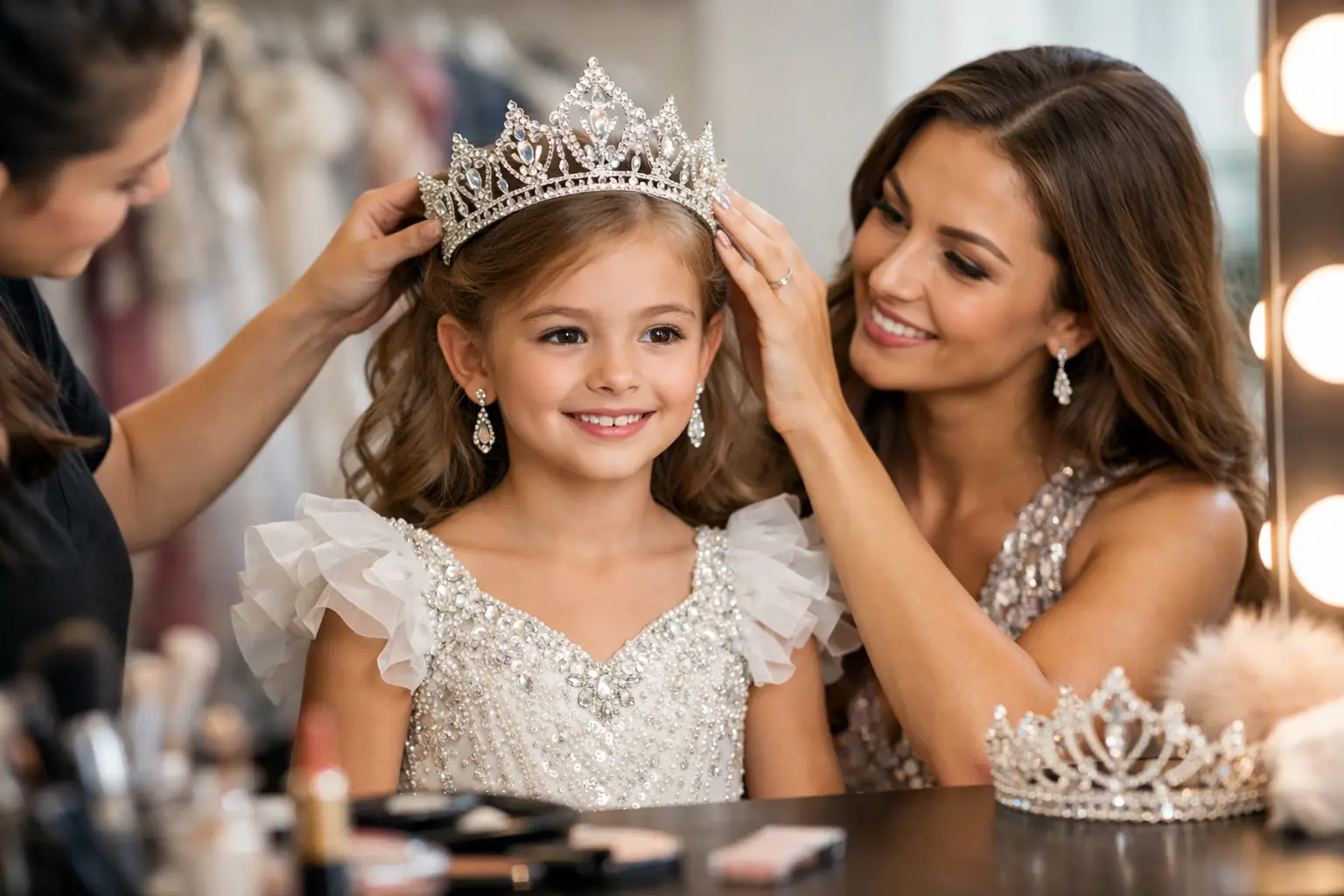
The spotlight may last only a few minutes, but a child’s pageant experience can shape confidence, communication, and memories that last far longer. Knowing how to prepare a child pageant contestant means creating a plan that honors the excitement of the stage without losing sight of the child at the center of it all. The strongest preparation is not about making a young contestant look or sound grown up. It is about helping her feel secure, polished, and proud of who she already is.
At a prestigious event, preparation brings peace of mind. A child who knows where to stand, how to introduce herself, and where her family will be after she walks onstage can enjoy the moment instead of feeling overwhelmed. Keep the goal clear from the beginning: a joyful, age-appropriate presentation of her personality.
Start With Her Readiness, Not the Wardrobe
Before selecting a gown or booking lessons, have an honest conversation with your child. Ask what sounds exciting to her about competing. Does she love dressing up, meeting new friends, performing, speaking, or supporting a cause? Her answers will tell you whether she is eager to participate or simply trying to please an adult.
A child contestant should understand the basic flow of the event in language that feels comfortable: she will wear a special outfit, walk on a stage, smile at the judges and audience, and have fun showing her personality. Avoid framing the pageant as a test of whether she is pretty enough, talented enough, or worthy enough. Titles are wonderful achievements, but they should never become the measure of her value.
Readiness also depends on temperament. Some children thrive with rehearsals and attention; others need more quiet time, frequent reassurance, or a slower introduction to competition. There is no single right age or personality for pageantry. The right fit is the child who can participate with support, enthusiasm, and room to be herself.
How to Prepare a Child Pageant Contestant With Confidence
Confidence is built in small, repeatable moments. Rather than running long rehearsals, practice for 10 to 15 minutes at a time several days a week. Keep the energy encouraging and specific. “I loved how you looked up when you said your name” gives a child a useful skill to repeat. General praise matters too, but detailed feedback teaches her what confidence looks and feels like.
Begin with a simple stage routine. Practice entering with good posture, pausing briefly, smiling, walking at a comfortable pace, turning, and exiting. For younger children, a natural walk is far more effective than stiff choreography. Their joy, ease, and personality should be the center of the presentation.
Use a clear practice space at home. A hallway, living room, or patio can become a mini runway with a strip of tape marking where to stop. Play her walk music if the event uses music, but also practice in silence. She may not hear the song clearly onstage, and she should know how to continue calmly either way.
If your child freezes or gets silly during practice, do not turn it into a correction marathon. Take a break, get a snack, laugh, and try again later. Children often absorb more through short, positive repetition than through pressure. The purpose is familiarity, not perfection.
Teach Poise Without Teaching a Performance Mask
Poise for a child is simple. It means standing tall, keeping hands relaxed, making friendly eye contact, and listening when someone speaks. It does not mean memorizing adult gestures or forcing a polished expression that does not feel natural.
Encourage a smile that looks like her real smile. Let her use an age-appropriate wave or a small pose she enjoys. If she is naturally bubbly, allow that sparkle to show. If she is gentle and reserved, do not push her to become the loudest contestant in the room. Authenticity reads beautifully under stage lights.
Make Interview Practice Feel Like a Conversation
For divisions that include interview, the best answers are rarely the most scripted. Judges want to meet the child, not hear a speech written by an adult. Help her practice answering in complete thoughts while keeping her words her own.
Start with familiar questions: “What is your favorite thing to do?” “Tell me about your family.” “What makes you happy?” “What would you like to be when you grow up?” If the pageant highlights community service or a platform, explain it in terms she truly understands. A young contestant can speak sincerely about kindness, helping animals, reading to younger children, or supporting a local cause without sounding rehearsed.
Teach her that it is okay to pause before answering. If she does not understand a question, she can say, “Could you please ask that another way?” This is a powerful skill, both onstage and beyond it. Practice with different adults so she gets comfortable speaking to people outside her immediate family.
Avoid drilling answers until they sound identical every time. Memorized responses can disappear the moment nerves arrive. Instead, give her a few simple ideas to remember, then let her explain them naturally.
Choose Styling That Lets Her Shine
A polished presentation matters, especially at a glamorous pageant event, but styling should support the contestant rather than overshadow her. Choose outfits that fit well, allow easy movement, and feel comfortable enough for her to sit, walk, and wait in. Have her wear each outfit at home before pageant day, including shoes and accessories.
For formalwear, the best choice depends on the pageant’s rules, division, and overall level of formality. Some children feel spectacular in a full ball gown; others move with more confidence in a lighter silhouette. A beautiful garment that constantly needs adjusting will distract from her stage presence.
Keep hair and makeup age-appropriate and aligned with event guidelines. The goal is camera-ready polish, not a look that makes a child unrecognizable. Soft, neat hair, a comfortable hairstyle that stays in place, and a fresh appearance usually photograph better than an overly complicated design.
Pack a simple touch-up kit with a brush, hair ties, bobby pins, blotting tissues, water, snacks, and a backup pair of comfortable shoes. If costumes, props, or talent items are involved, label everything and create a checklist before travel. A calm parent with an organized bag creates a calm contestant.
Create a Pageant-Day Plan That Protects Her Energy
Pageant days can include early call times, bright lights, waiting periods, photographs, rehearsals, and exciting noise backstage. Children handle this best when they know the plan and have basic needs covered. Prioritize sleep in the days leading up to the event, serve familiar meals, and avoid introducing a new hairstyle, beauty routine, or pair of shoes at the last minute.
Build in quiet moments. A favorite book, coloring activity, headphones, or a small comfort item can help a child reset between appearances. Check the event rules before bringing backstage items, but plan ahead for a healthy way to manage downtime.
Your words matter most when the pressure rises. Replace “Don’t mess up” with “Take your time and enjoy your moment.” Replace “You need to win” with “We are proud of you for being brave.” Even when a child is highly competitive, she needs to know that her family’s support does not depend on the scorecard.
At United Nations Pageants, the Grand Finale and Coronation Show is designed to feel spectacular, but a child will experience it best when she feels safe and supported behind the scenes. Make sure she knows who will help her get dressed, where she will meet you after each segment, and what to do if she needs a break.
Set Goals Beyond the Crown
A title is an incredible honor, yet it should be only one possible outcome of a successful weekend. Before the event, help your child choose two or three goals she can control. She might want to remember her smile, answer her interview question clearly, make a new friend, or walk onstage without holding an adult’s hand.
These goals give her something meaningful to celebrate regardless of placement. They also teach a valuable lesson about competition: effort, growth, and graciousness belong to her whether she receives a crown, an award, or a round of applause.
After the event, talk about the moments she enjoyed first. Ask what made her feel proud and what she would like to try differently next time. If she is disappointed, let her feel it without rushing to fix it. Then remind her that courage is stepping onto the stage, sharing her light, and learning from every experience.
The most unforgettable child pageant contestant is not the one who appears flawless. She is the one who walks into the spotlight knowing she is loved, prepared, and free to let her own bright personality shine.
Comments are closed