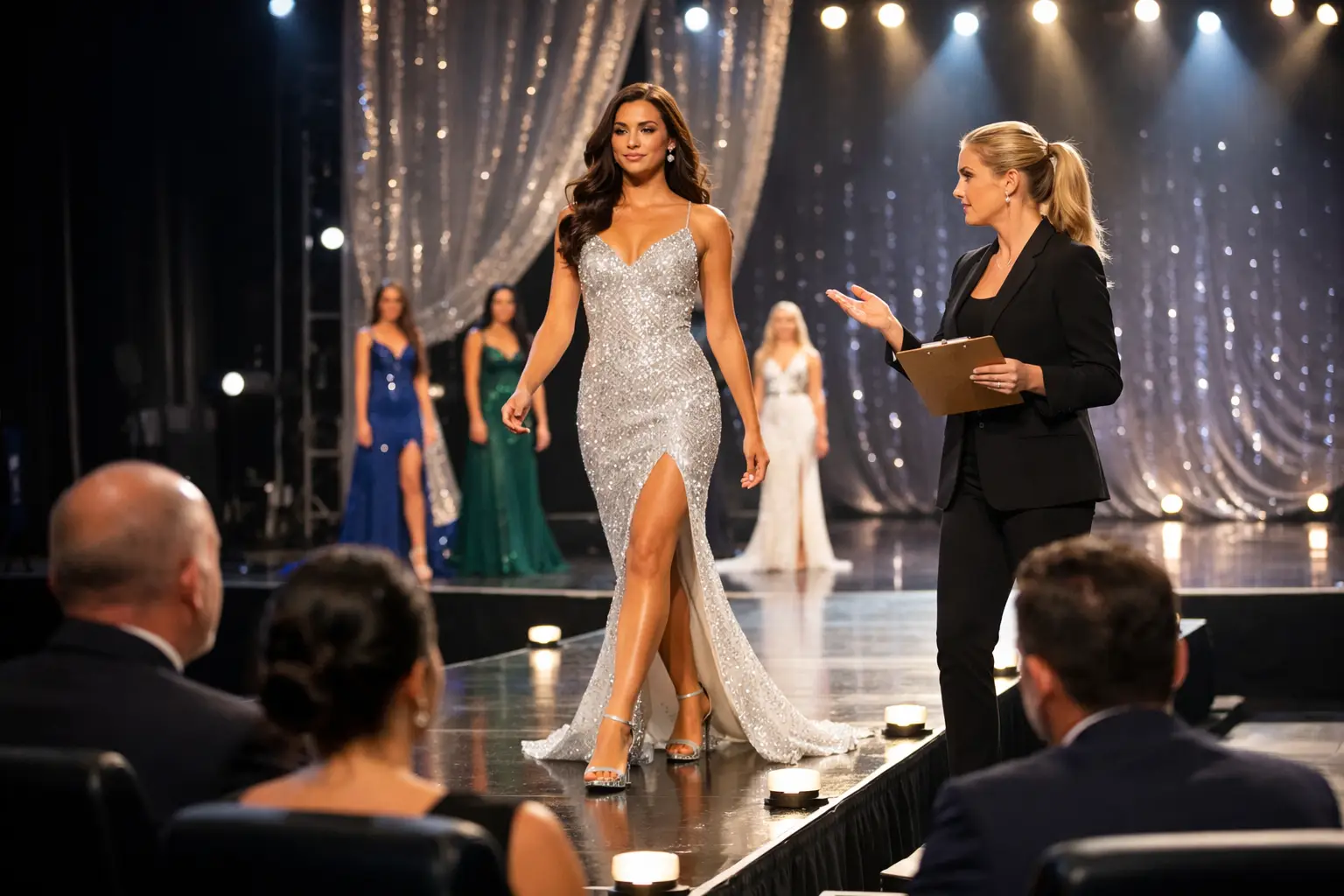
The audience can spot uncertainty before the first pose. A rushed step, a dropped gaze, or hands that do not know where to settle can distract from an otherwise spectacular presentation. The best pageant walking tips are not about copying someone else’s stride. They help you create a walk that looks polished, feels natural, and lets your personality take its place in the spotlight.
A great pageant walk combines athletic awareness with glamour. It should look effortless, but it is built through deliberate practice: posture, timing, facial expression, turns, and recovery when something does not go exactly as planned. Whether you are preparing for a local preliminary or a global finals stage, the goal is the same: make every step look intentional.
Start With Posture That Carries the Crown
Your walk begins before you move. Stand tall with your weight balanced through the center of both feet, your shoulders relaxed and gently pulled back, and your chest lifted without forcing it. Think of length through the spine, as though the crown of your head is reaching upward. This creates the poised, confident line judges and audiences notice immediately.
Avoid overcorrecting into a rigid stance. Locked knees and overly tight shoulders can make a contestant look uncomfortable, especially under bright stage lighting. The strongest posture feels open and energized, not stiff. Take a breath before you enter, relax your jaw, and let your arms rest naturally at your sides.
Your gaze matters just as much. Look outward, not down at the floor or toward your feet. If you need a focal point, choose one near the back of the room at eye level. This gives your walk direction and helps you project confidence to every part of the audience.
Build a Pageant Walk With Controlled Steps
The most beautiful walk is usually not the biggest one. Take steps that are long enough to create flow but short enough to keep control, particularly when walking in heels. Place one foot in front of the other with a subtle crossover, creating a clean line through the legs rather than an exaggerated tightrope walk.
Lead with the ball of the foot, then roll through with care. Slamming the heel, taking overly wide steps, or bending deeply at the knees can interrupt the elegance of your presentation. Your hips will move naturally as you walk. Let that movement happen instead of forcing a dramatic sway.
Tempo is where many contestants lose their polish. Walking too quickly can signal nerves, while walking too slowly can drain energy from the stage. Practice to music with a clear beat, then rehearse without music so you can keep your own reliable rhythm. Your pace should allow the audience to see your gown, your smile, and your confidence.
Let Your Arms Support the Look
Arms should move softly and naturally from the shoulders. Keep your hands relaxed, with fingers gently extended rather than clenched. A small, controlled swing works beautifully for most contestants and prevents the arms from appearing frozen.
If you are wearing a dramatic gown, cape, or outfit with sleeves, adjust your arm movement to suit the garment. Fashion should enhance your walk, not compete with it. During rehearsals, test the exact wardrobe pieces you plan to wear so you understand how fabric moves, catches light, and responds when you turn.
Practice Your Turns Until They Feel Effortless
A turn is a featured moment, not a pause between steps. When you reach your mark, settle your weight, hold your pose for a beat, and complete the turn with control. Rushing is one of the fastest ways to make a turn look unsteady.
For a classic pageant turn, pivot smoothly on the ball of one foot while the other foot helps guide the rotation. Keep your upper body lifted, your chin level, and your eyes engaged. Finish with a deliberate pose before walking away. The audience should see the beginning, middle, and finish of the movement.
There is no single turn that flatters every contestant. A full turn may be perfect for one division, while a softer quarter turn and pose may better suit another contestant, wardrobe, or stage layout. Ask your coach or director what is appropriate for the competition, then choose a signature finish that feels authentic to you.
Use the Stage Like It Belongs to You
Before competition day, learn the stage dimensions, runway length, entrance point, and designated stopping marks whenever possible. A smaller stage requires tighter steps and more precise turns. A large runway gives you room to extend your stride and create greater visual impact, but it also demands stronger stamina and consistent energy.
Do not treat the walk as a straight line from entrance to exit. Each mark is an opportunity to connect. Let your eyes travel across the room: center, one side, then the other. This should feel warm and natural, never like a mechanical head turn. A contestant who includes the entire audience appears more present and more confident.
At United Nations Pageants, contestants step onto a stage that celebrates glamour, purpose, and global representation. Bring a sense of occasion to every entrance. You are not simply crossing a runway. You are presenting your preparation, your story, and your readiness for an unforgettable moment.
Make Your Facial Expression Match Your Message
A beautiful walk can lose its impact if the facial expression does not match it. Your smile should look alive, not held in place. Think of a real moment of pride or excitement before you enter the stage. That emotion will create warmth in the eyes and keep your expression from becoming overly posed.
Practice several expressions in the mirror and on video: a bright smile, a softer elegant smile, and a confident neutral expression. Different competitions and wardrobe segments may call for different energy. A fun fashion presentation can carry more playfulness, while evening gown often benefits from composed sophistication.
The key is consistency. If your face looks nervous while your body tries to project confidence, the audience will notice the mismatch. Breathe steadily and give yourself permission to enjoy the presentation. Genuine joy photographs beautifully.
Train in the Shoes You Will Actually Wear
New heels on pageant day are a gamble. Even a gorgeous pair can change your balance, stride length, and turn radius. Break in competition shoes well before the event, but keep them clean and stage-ready. Walk on the surfaces you may encounter, including carpet, hard floors, and a smooth rehearsal runway if available.
Heel height is a trade-off, not a measure of talent. A higher heel can lengthen the leg line and bring drama to an evening gown, but only if you can walk, stop, and turn confidently in it. A slightly lower heel that allows elegant control will always look more polished than a towering shoe that makes you wobble.
Bring backup supplies backstage: heel grips, blister protection, fashion tape, and a second pair of shoes if your division and wardrobe allow it. Preparation gives you options, and options protect your confidence.
Rehearse on Video, Not Just in a Mirror
Mirrors are useful for posture and placement, but video shows the full truth of your movement. Record yourself walking toward the camera, away from it, and from the side. Watch without sound first. Do you look calm? Is your pace even? Do your arms and hands remain relaxed? Can you see a clear finish to each turn?
Then watch again with the music you plan to use, if applicable. Notice whether your walk matches the energy of the track. Small adjustments make a major difference: lifting your chin slightly, slowing the final two steps, or holding a pose one second longer.
Ask for feedback from people who understand pageant presentation, but do not collect so many opinions that you lose your own style. Choose one or two corrections at a time and repeat them until they become automatic. Confidence comes from repetition, not from trying to remember ten changes at once.
Recover Gracefully When Something Goes Wrong
A gown can catch, a shoe can slip, or a turn can land slightly off-center. What matters is what happens next. Do not look down in panic, make a face, or apologize with your body language. Reset your posture, continue at a controlled pace, and keep your expression composed.
Judges often recognize resilience. A contestant who recovers with grace may leave a stronger impression than one who delivers a technically perfect walk but never connects with the room. Preparation helps, but poise is what carries you through the unexpected.
The Best Pageant Walking Tips Begin With Belief
Technique gives your walk its structure, but belief gives it its presence. Do not wait until you feel completely fearless to walk like you belong on stage. Practice entering every rehearsal with intention, even when you are tired, even when you are still learning, and even when the room is empty.
When your name is called, take a breath, lift your posture, and step forward with purpose. Let the audience see not only the gown, the smile, and the polished turn, but the contestant who is ready to be remembered.
Comments are closed