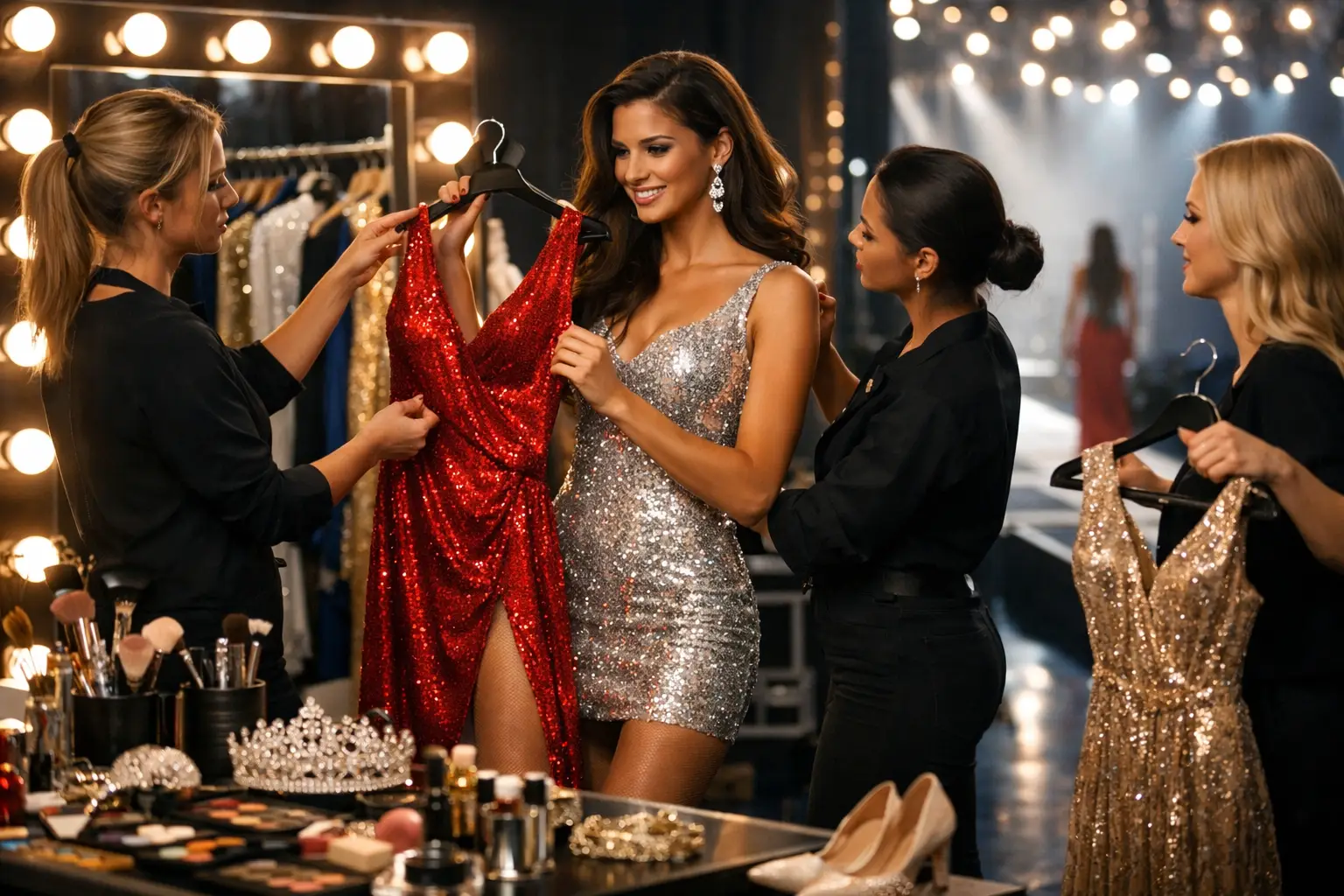
The lights rise, the music starts, and your first walk tells the audience who you are before you ever introduce yourself. That is why learning how to choose pageant opening outfit options is about far more than finding something pretty. Your opening look should feel polished, purposeful, and unmistakably you – a confident introduction worthy of a spectacular pageant stage.
An opening outfit does not need to compete with your evening gown. It has a different job. It should establish energy, flatter your movement, photograph beautifully, and support the overall production without making you feel costumed or uncomfortable. The right choice creates that exciting moment when you step into the spotlight and look completely at home there.
Start With the Production, Not the Rack
Before shopping, review the official pageant packet, opening-number instructions, and any direction about colors, theme, footwear, or styling. Some productions call for a unified color story. Others leave room for contestants to express their personalities. A themed opening may require denim, cocktail attire, national-inspired elements, a branded T-shirt, or a specific silhouette.
When there is direction, follow it precisely. A contestant can wear a beautiful outfit and still miss the moment if it does not fit the number. Matching the production communicates professionalism, respect for the show, and readiness to work as part of a larger presentation.
If the direction is broad, think about the mood of the opening. Is it high-energy and modern? Elegant and international? Playful for a youth division? Your outfit should support that atmosphere. A sleek jumpsuit can be sensational for a bold pop production, while a jewel-toned cocktail dress may better suit a glamorous Grand Finale-style introduction.
Choose a Silhouette That Lets You Perform
Your opening outfit has to move. You may be walking quickly, changing formations, turning, waving, posing, or joining choreography. A garment that looks flawless in a dressing room can become distracting under stage pressure if it rides up, twists, slips, or limits your stride.
The most reliable silhouettes create a clean line while allowing freedom through the shoulders, waist, and legs. Consider a fitted jumpsuit, a tailored romper for an age-appropriate youth look, a short cocktail dress, or a two-piece set with secure construction. For contestants who prefer more coverage, a structured pantsuit or a fashion-forward midi dress can be equally commanding.
Fit matters more than the label. Your outfit should sit smoothly when you lift your arms, rotate your torso, and take a full step forward. Test it in the shoes you plan to wear. Then test it again while sitting, walking, and posing. If you have to tug at it repeatedly during a fitting, it is not your opening outfit.
Let Your Division Guide the Level of Glamour
Every division deserves a memorable entrance, but the styling should feel authentic to the contestant and appropriate to the event. A Teen contestant may shine in a vibrant, youthful look with refined sparkle, while a Miss, Ms., or Mrs. contestant may prefer a sophisticated statement color, elevated tailoring, or sleek contemporary glamour. Kids divisions benefit from comfortable, secure looks that allow personality and joy to lead.
For Mr. contestants, the same principle applies. A sharp tailored jacket, polished shirt, fitted trousers, and intentional footwear can make an immediate impression. The goal is not to overdo every detail. It is to look camera-ready, confident, and connected to the energy of the production.
Use Color to Create a Strong First Read
Onstage, color is seen from a distance and through lighting. Choose a shade that brightens your complexion rather than one that simply looks good on a hanger. Saturated jewel tones such as emerald, sapphire, ruby, cobalt, and fuchsia often read beautifully under stage lights. White can look striking and fresh, while black can feel powerful when the design has texture, shine, or a standout silhouette.
Neon colors can be exciting in a high-energy production, but they are not always forgiving under strong lighting or flash photography. Pale pastels can be elegant, yet they may disappear against a light backdrop. This does not mean avoiding these shades completely. It means checking how your chosen color performs in the actual production environment whenever possible.
Also consider the group picture. If contestants are asked to wear a color family, do not choose a shade that is technically compliant but visually disconnected. The opening number should look cohesive, and your personal style can still shine through your cut, accessories, hair, and presence.
Add Sparkle With Intention
Pageant stages welcome glamour, but glamour works best when it has a focal point. Sequins, fringe, rhinestones, metallic fabric, or a dramatic sleeve can all create movement and visual interest. The trade-off is that too many competing details can make an outfit look busy, especially from the audience or in video.
Choose one primary statement: perhaps a dazzling fabric, a bold shoulder, a striking belt, or an unforgettable color. Let everything else support it. If the outfit is heavily embellished, keep jewelry edited. If the outfit is sleek and simple, a crystal earring or polished cuff can add the finishing glow.
Be mindful of comfort here as well. Heavy beadwork can pull at delicate fabric, fringe can catch on jewelry, and sharp embellishments can irritate skin during a long rehearsal day. A beautiful look is only truly successful when you can focus on your performance instead of your wardrobe.
Make Sure It Feels Like Your Titleholder Brand
Your opening outfit is one of your earliest opportunities to show your personality. Think about the qualities you want people to notice: polished, joyful, fearless, elegant, approachable, fashion-forward, or globally inspired. The best look amplifies those qualities without turning you into someone else.
A contestant who feels most powerful in clean, classic style does not need to force herself into an ultra-trendy look just because it is popular. Likewise, a contestant with bold personal style should not automatically choose a plain dress because it feels safer. The standard is not sameness. It is intentionality.
At United Nations Pageants, contestants step onto an international stage that celebrates glamour, purpose, and representation. Choose an outfit that makes you feel prepared to represent your community, your story, and your ambition with pride.
Photograph and Rehearse Before You Commit
Take photos and short videos from the front, side, and back in bright light. What looks balanced in a mirror may reveal a loose strap, a sheer panel, a wrinkling issue, or a hemline concern on camera. Ask a trusted coach, parent, mentor, or stylist for feedback, but remember that the final choice must let you feel confident.
Rehearse your opening walk in the complete look. Practice your smile, posture, turn, arm placement, and any choreography. Pay attention to where your hands naturally fall. If they keep covering an area of the outfit, that may be a sign the fit or design is not serving you.
Bring a smart backup plan, too. Pack fashion tape, a small sewing kit, clear straps if permitted, comfortable rehearsal shoes, and an alternate pair of earrings. Preparation protects your peace when the schedule gets exciting and fast-paced.
The Final Test: Would You Walk Out Proud?
The strongest opening outfits do not just earn compliments backstage. They change the way you carry yourself. You stand taller, smile bigger, and walk with the confidence of someone ready for her moment.
Choose the look that supports the production, honors your division, and lets your personality take center stage. When the music begins, your outfit should feel less like something you are wearing and more like the first brilliant chapter of the story you came to tell.
Comments are closed