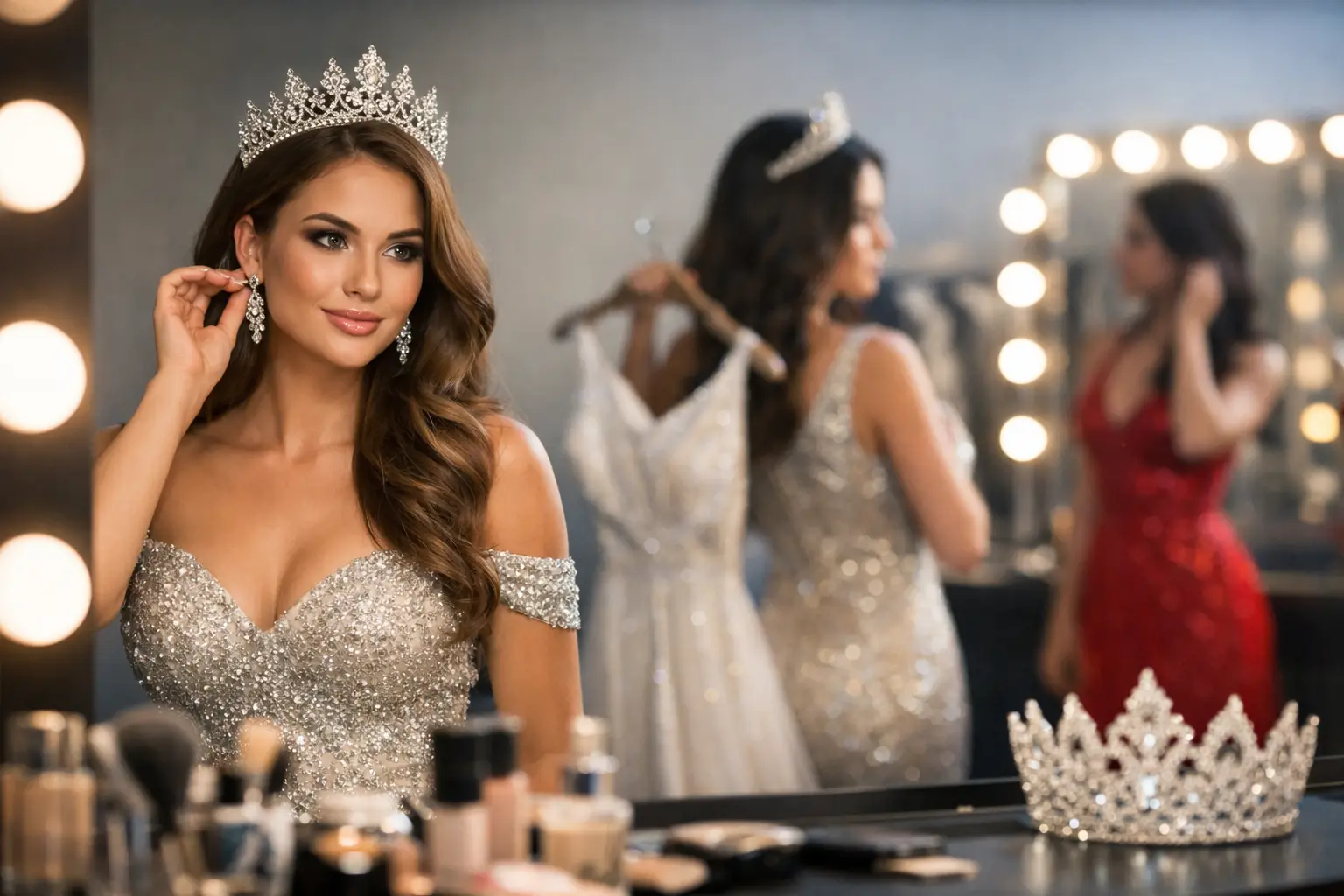
The moment your name is called is not the moment preparation begins. It begins in the quiet choices that shape how you walk into the room, introduce yourself, answer with conviction, and carry your purpose under the lights. This pageant contestant preparation guide is designed for competitors who want to arrive polished without losing the personality, values, and presence that make them unforgettable.
At a prestigious competition, preparation is not about becoming someone else. It is about presenting your strongest, most intentional self. Every division, from Kids and Teen to Miss, Ms., Mrs., and Mr., requires a different level of support and strategy, but the foundation remains the same: clarity, consistency, confidence, and care.
Start With Your Personal Pageant Vision
A pageant can move quickly. There may be rehearsals, appearances, interviews, photo moments, evening wear, competition segments, and new friendships forming all around you. Contestants who feel grounded have already decided what they want their experience to represent.
Start by writing a clear personal statement for yourself, even if no one else will read it. Why are you competing? What do you want judges, fellow contestants, and supporters to remember about you? Is your platform connected to service, leadership, family, advocacy, entrepreneurship, or a cause that has changed your life?
Your answer becomes a compass. It keeps your wardrobe choices, interview responses, social presence, and onstage energy connected rather than scattered. Glamour earns attention. Purpose gives it meaning.
For parents preparing a child contestant, this step should feel encouraging, not heavy. Ask open questions and let the contestant express what excites them. The goal is never to script a child into an adult version of confidence. It is to help them feel safe, prepared, and proud of their own voice.
Build an Interview Presence, Not a Script
The strongest interview answers do not sound memorized. They sound thoughtful, direct, and alive. Judges are not looking for a speech delivered at them. They are meeting a person who may represent a title, a community, and an international stage.
Practice answering questions in a way that gives each response a beginning, a personal point of view, and a clean finish. If you are asked about your platform, explain what it is, why it matters to you, and what action you believe can make a difference. If a question is unexpected, take a breath before answering. A brief pause reads as composure, not uncertainty.
Avoid filling every silence with extra words. You do not need the longest answer in the room. You need an answer that is sincere and easy to follow. Record practice sessions on your phone and listen for rushed phrases, repeated filler words, or answers that wander away from the question.
Practice the Details Judges Notice
Presence lives in details. Enter the interview room with an upright posture, relaxed shoulders, and a natural smile. Make eye contact without staring. Greet each person warmly, and use your normal speaking voice rather than performing a version of yourself that cannot be sustained.
Your outfit should support your confidence, not distract from it. Choose a look that is appropriate for the competition guidelines, properly fitted, and comfortable enough to let you sit, stand, and move with ease. A polished interview suit or dress is valuable, but it cannot replace preparation. The real finishing touch is knowing what you stand for.
Train for the Stage You Will Command
Stage presence is a learned skill. Some contestants begin with years of dance, modeling, public speaking, or performance experience. Others are stepping onto a major stage for the first time. Both can be compelling when they train with intention.
Practice your walk in the shoes you plan to wear, on a surface that is as similar to a stage as possible. Focus first on posture and tempo. A controlled walk gives the audience time to see you, while a rushed walk can make even a beautiful wardrobe disappear into the moment.
Film your walk from the front, side, and back. Watch with a practical eye. Are your arms relaxed? Does your smile remain natural? Do you pause long enough at key points? Are your turns clean? Small adjustments create a major visual difference.
Each competition category has its own purpose. Fitness or activewear calls for energy and confidence. Evening wear calls for elegance, control, and connection. Talent, if included, demands rehearsed technical skill as well as emotional presence. Do not use the same facial expression, pace, or movement for every segment. Let the category guide your presentation while your identity remains consistent.
If you work with a coach, bring clear goals to each session. If coaching is not part of your plan, create a simple weekly routine: walk practice, interview practice, wardrobe fitting, and one full run-through. Repetition turns nerves into familiarity.
Choose Wardrobe That Performs as Beautifully as It Photographs
A competition wardrobe has a job to do. It should reflect the contestant, honor the event requirements, move well under stage lighting, and hold up through travel and rehearsals. A gown that looks spectacular standing still may be difficult to manage on stairs or during a turn. A suit may look sharp in a mirror but wrinkle quickly after hours of activity.
Fit is the priority. Tailoring can elevate a simple garment more than extra embellishment ever will. Test each look with the exact undergarments, shoes, jewelry, and accessories you plan to wear. Sit down. Walk quickly. Raise your arms. Turn. If something shifts, pinches, catches, or requires constant adjustment, solve it before competition week.
Pack every look as a complete set. Keep shoes, accessories, backup hosiery, garment tape, safety pins, and touch-up essentials organized by category. This is not about expecting disaster. It is about protecting your focus. When the schedule is full and the energy is high, organization is a luxury you give yourself.
Prepare Your Mind as Carefully as Your Appearance
Nerves are not a sign that you are unprepared or unworthy. They often mean you care deeply about the opportunity in front of you. The goal is not to eliminate nerves. It is to keep them from directing your decisions.
Create a pre-competition routine that settles you. For some contestants, that may be a quiet morning walk, prayer, journaling, stretching, breathwork, or a playlist that puts them in a focused mood. For others, it is a few minutes with family or a trusted mentor. The best routine is personal, realistic, and easy to repeat while traveling.
Protect your energy during the event. You do not need to compare every dress, score, follower count, or rehearsal moment. Other contestants can be extraordinary without diminishing your own place on the stage. Be kind, be professional, and stay present. The friendships and connections you make can become one of the most meaningful parts of the experience.
Sleep, hydration, and balanced meals matter more than last-minute panic training. A demanding schedule may make perfection impossible, so aim for steadiness. If you have a long day ahead, prepare snacks and water in advance and give yourself enough time to get ready without rushing.
Make Rehearsal Your Competitive Advantage
Rehearsal is where a large production becomes familiar. Pay close attention to stage marks, entrance cues, music timing, lineup instructions, and transitions. Listen the first time instructions are given, write them down when appropriate, and ask respectful questions if something is unclear.
Professionalism is visible before the competition begins. Arrive early, be prepared, and treat staff, fellow contestants, families, sponsors, and volunteers with genuine respect. A titleholder represents more than a beautiful photograph. They represent how they show up in a room, especially when the room is busy.
At United Nations Pageants, the World Finals experience celebrates glamour, purpose, and global representation. Bring the excitement, but also bring your readiness to be part of something bigger than an individual score. Your conduct backstage is part of your presentation, too.
Let Your Purpose Be Seen After the Spotlight
Winning a title is an incredible honor, but it is not the only measure of a successful pageant experience. The skills you build through preparation can strengthen your public speaking, self-discipline, confidence, professional image, and ability to lead with grace.
Before you compete, consider how you will carry the experience forward. You may share your platform with your school or community, thank the people who supported you, create content with intention, or continue developing the cause that brought you to the stage. A crown is most powerful when it becomes a visible commitment to service and possibility.
When the lights rise and the music begins, do not search for a perfect performance. Walk out knowing you prepared with purpose, showed up with courage, and made room for the world to see exactly who you are.
Comments are closed