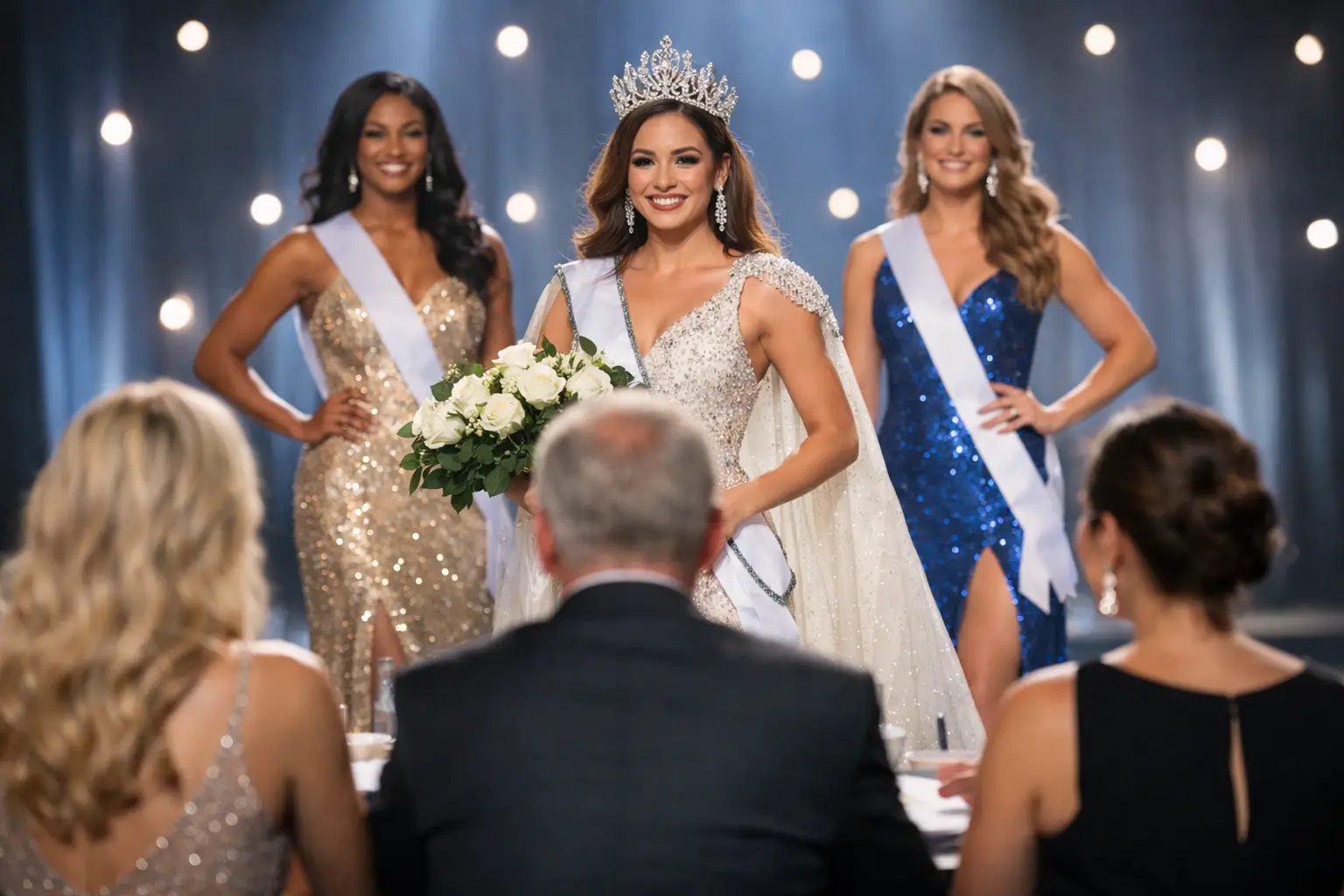
The moment a contestant steps into the spotlight, pageant judging begins long before the final question is asked. Judges are not searching for one perfect hairstyle, gown, walk, or answer. They are evaluating how every element comes together to reveal a poised, prepared, and purposeful representative ready for a title.
A winning performance feels memorable because it is complete. The contestant appears comfortable in her own presence, communicates with clarity, respects the competition, and brings an energy that reaches beyond the stage. That standard applies across divisions, from Kids and Teen to Miss, Mrs., Ms., and Mr. Each division has its own personality, but presence, preparation, and authenticity remain powerful at every level.
Pageant Judging Is About the Whole Contestant
A pageant score is rarely built on one category alone. A contestant may have an extraordinary evening gown presentation, but interview carries equal weight when it reveals limited preparation. Another contestant may give a polished interview yet lose impact when she appears disconnected or rushed onstage. The strongest competitors create consistency.
Judges notice whether a contestant’s wardrobe, walk, communication style, and platform support the same overall story. That does not mean every contestant must fit one mold. In fact, individuality is often what makes a candidate stand out. The goal is not to imitate the person who won last year. It is to present a clear, elevated version of yourself.
At an international event, that clarity matters even more. Contestants bring different cultures, experiences, causes, and personal styles to the same stage. A titleholder should be able to honor that diversity while representing the organization with warmth, confidence, and grace.
Presence Is More Than a Smile
Stage presence is the quality that makes an audience look up when a contestant enters the room. It begins with posture, eye contact, pace, and body awareness, but it goes further. A contestant with presence appears engaged in the experience rather than focused only on getting through her routine.
A genuine smile is memorable because it looks connected to the moment. Controlled movement reads as confidence. Strong posture communicates readiness before a word is spoken. These details may seem small in rehearsal, yet they shape the first impression that can influence how judges receive the rest of a presentation.
Presence also requires balance. Overly dramatic gestures, a rushed walk, or constant posing can distract from an otherwise beautiful presentation. It depends on the contestant, the division, and the production style, but polished restraint is often more commanding than trying to fill every second with movement.
What Judges Look for in Interview
Interview is where preparation becomes personal. Judges want to meet the person behind the sash, not a collection of memorized pageant phrases. They are listening for a contestant who can think clearly, answer directly, and hold a thoughtful conversation.
The best interview answers usually begin with listening. Contestants who rush to deliver a rehearsed response can miss the actual question. Take a breath, understand what is being asked, and respond with a clear point of view. A concise answer with a specific example is often more powerful than a long answer that circles the topic.
Preparation matters, but authenticity matters more. Know your platform, your biography, your goals, and the organization you hope to represent. Be ready to discuss current issues connected to your purpose, your community involvement, and what you would do with the title. Then leave room for your personality. Judges remember warmth, humor, thoughtfulness, and calm self-assurance.
A contestant does not need to have lived every experience or know every answer. When faced with a difficult question, honesty and composure carry more value than guessing. It is completely acceptable to say that you would want to learn more, then explain the values that would guide your response.
Purpose Must Be Lived, Not Recited
A platform should never feel like a line added to a contestant’s résumé. The most compelling causes are connected to real action, whether that means volunteering, fundraising, mentoring, advocacy, education, or sharing a story that can help others feel seen.
Judges may ask how a contestant became involved, what impact she has made, and how she plans to expand that work as a titleholder. Specificity creates credibility. Instead of saying, “I want to make a difference,” explain who you serve, what you have done, and what measurable next step you want to take.
Purpose does not need to be grand to matter. A local initiative, a school-based project, a family-centered cause, or a commitment to encourage confidence in young people can all carry meaningful impact when the contestant speaks from experience. The key is ownership. A titleholder’s purpose should feel like something she will continue to champion after the coronation lights fade.
Presentation Categories Reward Preparation
Fashion and formalwear categories give contestants an opportunity to communicate style, discipline, and confidence without an interview response to support them. The right wardrobe does not have to be the most expensive option in the room. It needs to fit beautifully, suit the contestant, align with the event, and allow confident movement.
Before competition, practice in the exact shoes and garment whenever possible. Learn where the hem falls, how the fabric moves, where the train needs attention, and how to recover gracefully from a small mishap. A contestant who can adjust calmly if an earring shifts or a shoe catches demonstrates professionalism.
For fitnesswear, runway, talent, or other competition categories, the same principle applies: preparation should make the performance look effortless. Judges can see the difference between someone who understands her routine and someone who is hoping to remember it under pressure.
Hair, makeup, and styling should enhance rather than hide. A contestant should still look like herself, only elevated for the stage. This is especially important for contestants preparing for photography, live audiences, and bright production lighting. Test the full look before arrival, because a glamorous image in a mirror may read very differently under stage lights.
Sportsmanship Is Part of the Titleholder Standard
Competition brings emotion. There is anticipation before the event, pressure during scoring, and real vulnerability when results are announced. How a contestant handles those moments says a great deal about her readiness for a crown.
Judges, directors, volunteers, sponsors, and fellow contestants notice professionalism. Be on time. Respect the schedule. Listen during rehearsals. Thank the people working behind the scenes. Celebrate other contestants sincerely. These actions are not separate from pageant performance. They show whether someone can represent a title with maturity in public settings, media opportunities, community appearances, and future events.
Sportsmanship also protects the experience for everyone involved. A pageant should be a spectacular celebration of achievement, not a stage for comparison or rumor. Contestants who build friendships, encourage their peers, and maintain composure contribute to the prestige of the entire event.
How to Prepare for Pageant Judging With Intention
Start preparing early enough that confidence comes from repetition, not last-minute pressure. Schedule mock interviews with people who will ask unexpected questions. Record your walk and watch it with a constructive eye. Practice your introduction until it sounds natural, then practice it again in full competition attire.
Build a preparation plan around your weaker category instead of only rehearsing what already feels easy. If interview makes you nervous, prioritize conversation practice. If stage presence feels uncertain, work with a coach or rehearse in front of a small audience. If your platform needs depth, spend time serving the cause rather than only refining the wording.
It also helps to define your personal message in one sentence. What should judges, audience members, and fellow contestants remember about you? That message might be rooted in leadership, service, resilience, creativity, family, or global connection. Let it guide your choices without turning every answer into a slogan.
At United Nations Pageants, the World Finals stage calls for contestants who can celebrate glamour while carrying purpose with distinction. The crown is not simply recognition for a single evening. It is an invitation to lead, appear, communicate, and represent with excellence.
Walk into the next competition ready to be seen for more than your gown, your title, or your first impression. Bring the preparation that steadies you, the purpose that moves you, and the confidence that makes your presence impossible to forget.
Comments are closed