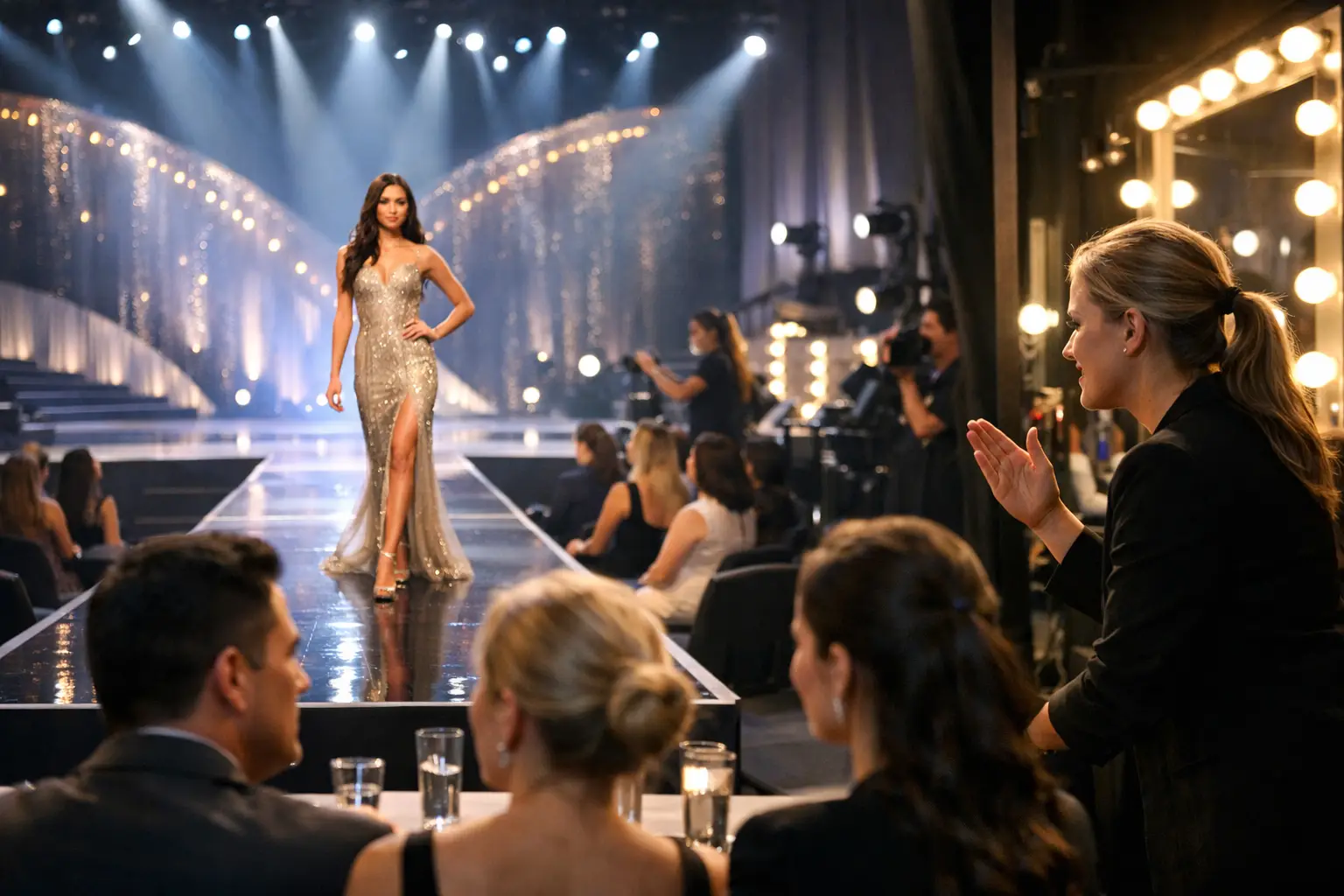
The first few steps tell the judges almost everything. Before you answer a question, before your gown catches the light, before your smile fully lands, your walk is already speaking for you. That is why pageant walking tips for stage matter so much – not as small finishing touches, but as the foundation of your presentation.
A great stage walk does not look forced or overly practiced. It looks effortless, elegant, and fully in command. The audience sees confidence. The judges see control. And when your walk matches your energy, styling, and presence, your entire presentation rises to a more competitive level.
Why stage walking changes everything
Walking on a pageant stage is different from walking in a ballroom, a studio, or your living room. The lights are brighter, the space is larger, and every movement reads bigger than you think. A slight shoulder drop can look like uncertainty. A rushed turn can break the line of your gown. A beautiful smile with uneven pacing can still feel disconnected.
That is why strong pageant walking tips for stage always start with intention. You are not simply getting from one mark to another. You are creating a picture from every angle. Each step should support your posture, your poise, and the story you want the judges to remember.
There is also a practical side to this. Different stages react differently. Some are slick. Some have seams. Some feel wide open, while others feel shorter than expected. A contestant who understands how to adjust in real time often looks more polished than someone with a perfect routine that only works in rehearsal.
Start with posture before you think about pace
If your posture is off, no amount of charisma will fully clean up the walk. The goal is tall, relaxed, and elegant. Lift through the crown of your head, keep your neck long, and let your shoulders settle naturally instead of pulling them stiffly back. Your core should be engaged enough to support you, but not so tense that your movement becomes robotic.
Good posture creates the runway for everything else. It improves your line, gives your gown better movement, and makes your arms look more graceful. It also helps your face appear calmer because your body is not fighting for balance.
One common mistake is trying to look powerful by becoming rigid. That usually reads as nervousness. True stage presence has structure, but it still breathes. You want control with softness.
Your head position affects your score more than you think
Keep your chin level and your gaze lifted. Looking down, even for a moment, can shrink your energy. Of course, if the stage has stairs or a difficult surface, safety comes first. But once you know the layout, train yourself to trust your steps and keep your focus outward.
The strongest contestants do not stare blankly into the audience. They connect. Their eyes stay alive, their expression stays warm, and their face matches the elegance of the walk.
Heel placement and stride length make or break the look
A polished pageant walk usually comes from smaller, cleaner steps than beginners expect. Long strides can make the upper body bounce, especially in evening wear. Shorter, controlled steps create glide. They also make it easier to maintain balance during turns and stops.
Place one foot with intention and let the other follow in a straight, confident line. Depending on your division, shoe height, and outfit, your exact technique may vary. A teen contestant in a lighter dress may move with a little more freshness and bounce, while a Mrs. contestant in a full gown may need a slower, more regal pace. The key is matching your walk to your presentation, not copying someone whose division or style is completely different.
If you hear your steps pounding, you are likely walking too heavily. If you feel rushed, your stride may be too ambitious for the heel height. A winning walk often feels smoother and more measured than dramatic.
Practice your arms so they stop distracting from your walk
Most contestants focus on feet first and forget the arms until they see video. Then it becomes obvious. Arms that swing too much, freeze at the sides, or drift awkwardly can pull attention away from an otherwise beautiful presentation.
Let your arms move naturally from the shoulder with light control. They should complement the walk, not perform on their own. In gown competition, elegance is usually the priority. In more fashion-forward moments, you may be able to add a little more styling, but even then, less tends to look more luxurious.
Your hands matter too. Keep them soft, not clenched. Tension in the hands shows up instantly under stage lights.
The stop, the pose, and the turn need their own rehearsal
A lot of contestants walk well until they have to stop. Then they shift their weight, fidget, overthink the pose, or rush the turn. This is where stage polish becomes obvious.
When you hit your mark, arrive fully. Settle into the stop with control, hold your posture, and let the moment land. Your pose should feel intentional and flattering, but it should also be sustainable for a few beats. If your pose only works for one second before you wobble, it is not stage-ready.
Turns should be clean, not frantic. Whether you use a pivot, a step-turn, or another style taught by your coach, the goal is the same: maintain elegance all the way through the movement. Finish the turn before you start the next action. That small discipline makes a major difference.
Timing is part of presentation
Music, emcee pacing, and stage direction can all affect your rhythm. Some contestants move too fast because they are nervous. Others drag the walk and lose momentum. The best timing feels deliberate. You want enough pace to keep energy high, but enough control to let each moment register.
This is especially important in a major event setting, where the atmosphere is spectacular and every contestant is aiming to command attention. On a prestigious stage such as United Nations Pageants, timing can elevate a beautiful walk into a memorable one.
Stage walking tips for different outfits and divisions
Not every stage walk should look exactly the same. Wardrobe changes movement. So does age division, personality, and the category you are competing in.
In evening gown, your walk should usually feel elongated, refined, and fluid. Let the gown move with you, but do not let it lead you. If the skirt is fitted, test your step length in advance. If it has volume, practice clearing it smoothly without fussing.
In interview or introduction moments, the walk may need to feel more natural and approachable. Your confidence still matters, but the energy can be slightly more relaxed. In kids and teen divisions, judges may expect age-appropriate charm rather than overly mature styling. In Mr. divisions, clean lines, strength, and confidence tend to read better than exaggerated movement.
It depends on the pageant system as well. Some reward classic pageant elegance. Others lean more modern or fashion-forward. Smart contestants study the stage, the scoring, and the style of the event before finalizing their walk.
Rehearse like the stage is real
The most effective training is specific. Practice in your competition shoes, in a dress with a similar hemline, and in a space where you can mark entrances, stops, and turns. If possible, rehearse on multiple surfaces so you learn how your body reacts.
Video is one of the fastest ways to improve. What feels graceful may look rushed. What feels subtle may disappear on camera. Record from the front, side, and a distance so you can evaluate posture, arm movement, facial expression, and pacing.
Rehearsal also helps with nerves. Confidence is not pretending to be calm. Confidence is knowing your body has repeated the movement enough times that pressure does not take over.
The confidence piece is real, but it has to be built correctly
Contestants are often told to just be confident. That advice sounds good, but it is incomplete. Real confidence on stage comes from preparation, body awareness, and trust. If your walk feels uncertain, confidence will not magically appear under bright lights.
Build confidence by fixing one thing at a time. Improve posture first. Then work on stride. Then your stop. Then your turn. Then expression. When every part becomes more reliable, your presence changes naturally.
It also helps to remember this: the judges are not only looking for perfection. They are looking for command, grace, and recovery. If you miss a beat, do not announce it with your face. Stay composed and keep moving. Sometimes the contestant who handles an imperfect moment with elegance looks more experienced than the contestant who never had to adapt.
What judges notice immediately
Judges notice whether you look comfortable in your own presentation. They notice if your walk fits your wardrobe, your division, and the tone of the event. They notice whether your smile stays connected to your body language or feels pasted on.
Most of all, they notice consistency. A contestant who enters strongly, walks with purpose, stops with control, and exits with the same polished energy creates trust. That trust becomes presence. And presence is what keeps attention on you long after the walk is over.
Every stage gives you a chance to be seen in full color – glamour, discipline, confidence, and purpose working together. So practice until your walk no longer feels like a routine. Practice until it feels like your introduction to the crown.
Comments are closed