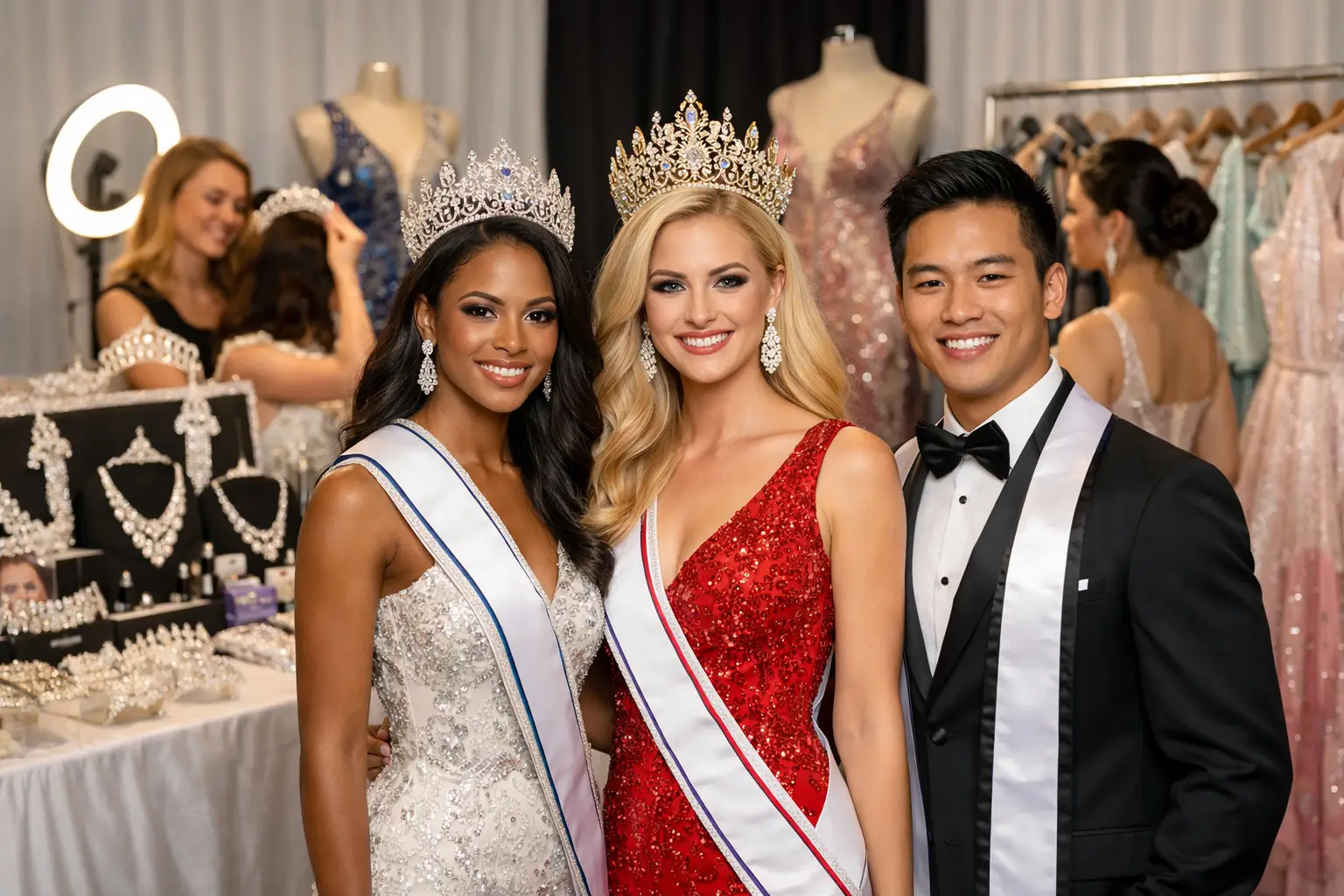
A crowded lobby tells you everything you need to know about a successful beauty pageant vendor booth. The brands that get remembered are not always the loudest or the largest. They are the ones that feel polished, easy to approach, and perfectly matched to the energy of the event.
At a pageant, the booth is not just a selling space. It is part retail, part brand showcase, and part relationship-building moment. Contestants, parents, coaches, titleholders, and supporters are all moving through the venue with different goals. If your booth speaks to only one of them, you miss the full opportunity. If it reflects the glamour, confidence, and high-level presentation pageantry is known for, it can become one of the standout features of the event experience.
What makes a beauty pageant vendor booth work
A beauty pageant audience has high visual standards. That does not mean every booth needs an oversized budget, but it does mean presentation matters immediately. A wrinkled tablecloth, cluttered display, or generic signage can make a brand look out of place in a setting built around excellence, appearance, and stage-ready confidence.
The best booth starts with alignment. Your product or service should make sense in the pageant world. Beauty, fashion, accessories, formalwear, coaching, photography, wellness, skincare, cosmetics, hair tools, jewelry, gifts, sponsorship activations, and keepsake products usually fit naturally. Some businesses outside those categories can still perform well, but only if they tailor their message to the audience in front of them.
That is where many vendors get it wrong. They bring a trade show setup designed for a general public event, then wonder why traffic feels passive. A pageant crowd responds to relevance and polish. Your booth should answer an unspoken question right away: why does this belong here?
Design your beauty pageant vendor booth for attention and trust
In pageantry, first impressions happen fast. Booth design should feel elevated, but not intimidating. Guests should be drawn in by the look of the space and then feel comfortable enough to stop, browse, and ask questions.
Start with color and branding. Clean, glamorous presentation works best – think coordinated linens, professional signage, strong lighting, and a layout that photographs well. Many attendees will post content from the event, and a booth that looks camera-ready has a better chance of extending its reach beyond the venue floor.
Product placement matters just as much as decor. Keep hero items at eye level. If you offer lower-priced impulse products and higher-ticket services, show both clearly so guests can engage at their comfort level. A parent looking for a gift and a contestant shopping for pageant prep may both stop at your booth, but they are not shopping in the same way.
Trust is the other half of booth design. Prices should be visible. Staff should look polished and informed. Samples, mirrors, before-and-after visuals, or display images can help people understand value quickly. If attendees have to guess what you do, you have already lost momentum.
The best products and services to feature
Not every item in your inventory deserves booth space. Pageant events move quickly, and attention is limited. Feature products that are easy to understand, visually appealing, and relevant to the audience.
Beauty and self-presentation products tend to perform well because they connect directly to the event environment. Lip products, lashes, hair accessories, skincare essentials, pageant earrings, shapewear, emergency kits, and branded keepsakes all make sense. Service-based vendors can also do well if they create a strong visual presentation. Coaching packages, photography sessions, branding consultations, wellness offers, and image services can all convert, but they need a clear pitch and a simple next step.
There is also value in offering a mix of immediate and future-focused buying options. Some guests want to leave with something in hand. Others may be interested in booking later, especially if the offer involves a larger investment. The smart move is to build for both. A booth that only pushes high-ticket offers can feel inaccessible. A booth that only sells small items may attract traffic without creating long-term customer value.
Booth strategy changes depending on the event audience
This is where nuance matters. A local preliminary, a state pageant, and an international finals event can all attract different buyer behavior. The same booth strategy will not work equally well in every room.
At family-heavy events, practical purchases and keepsake items often do well. Parents may be more focused on convenience, presentation essentials, and memorable extras. At larger, prestige-driven pageants, attendees may respond more strongly to premium services, luxury accessories, elevated branding, and products that feel exclusive.
Multi-division events create even more opportunity. A pageant that welcomes Miss, Mrs., Ms., Mr., Teen, and Kids participants brings together a broader audience than a single-division competition. That means vendors can reach contestants across life stages, as well as families and supporters who are already in a buying mindset. For a polished international platform such as United Nations Pageants, that range can make booth planning especially worthwhile when the brand presentation matches the scale of the event.
How to attract traffic without feeling pushy
The strongest vendors know how to create energy without creating pressure. At a pageant, atmosphere matters. Guests want to feel welcomed, not chased down.
Interactive elements help when they are done with intention. A small demonstration, touch-up station, product sampling moment, or photo-friendly setup can create natural engagement. Give people a reason to pause, not a reason to avoid eye contact. Staff should be ready to greet attendees warmly, explain the offer quickly, and then let the guest lead the pace.
Promotions can help, but they should still feel on-brand. A pageant audience is drawn to excitement, exclusivity, and recognition. Limited event specials, titleholder gifts, competition weekend bundles, or elegant giveaway entries can all work better than generic discount messaging. The presentation of the offer matters almost as much as the offer itself.
It also helps to think beyond the booth table. If event rules allow it, branded packaging, polished signage visible from a distance, and a refined team appearance all make the booth easier to notice. A glamorous event deserves a booth that looks like it belongs on that stage-side level.
Common mistakes that weaken results
The most common problem is trying to do too much. Too many products, too much text, too many visual elements, or too many competing messages can make the booth feel chaotic. In a pageant setting, clarity wins.
Another mistake is ignoring the emotional side of the audience. People at pageants are not only shopping based on need. They are shopping in a high-energy environment tied to dreams, presentation, celebration, and personal milestones. Vendors who understand that emotional context usually perform better than those who focus only on transactions.
Some booths also miss the follow-up opportunity. Not every attendee will buy on the spot, especially if they are preparing for competition, supporting a contestant, or moving between rehearsals and shows. If your booth does not create an easy path for future connection, you may lose interested buyers who simply were not ready in that exact moment.
Finally, some vendors underestimate staffing. A beautiful setup cannot carry a disengaged team. Booth staff should be polished, upbeat, and comfortable speaking with different kinds of attendees, from excited teen contestants to discerning parents to potential sponsors.
Measuring success beyond day-of sales
A beauty pageant vendor booth should not be judged only by what sells in a few hours. Direct revenue matters, but pageant events also create brand visibility, audience trust, and future business.
A strong booth can generate repeat customers, service bookings, social content, referrals, sponsor conversations, and event credibility. That is especially true at high-profile pageants where attendees are highly connected within the pageant and modeling community. One strong showing can continue working long after the crowns are awarded.
That said, not every event produces the same return. The right fit depends on audience size, booth cost, event prestige, purchase behavior, and how well your offer aligns with the pageant environment. Vendors who treat each event as a strategic brand placement, not just a pop-up sale, tend to make better decisions over time.
A great booth does more than display products. It becomes part of the pageant experience itself – polished, memorable, and worthy of the spotlight. If your presentation matches the glamour and purpose of the event, people will not just pass by. They will stop, connect, and remember your brand after the final walk is over.
Comments are closed