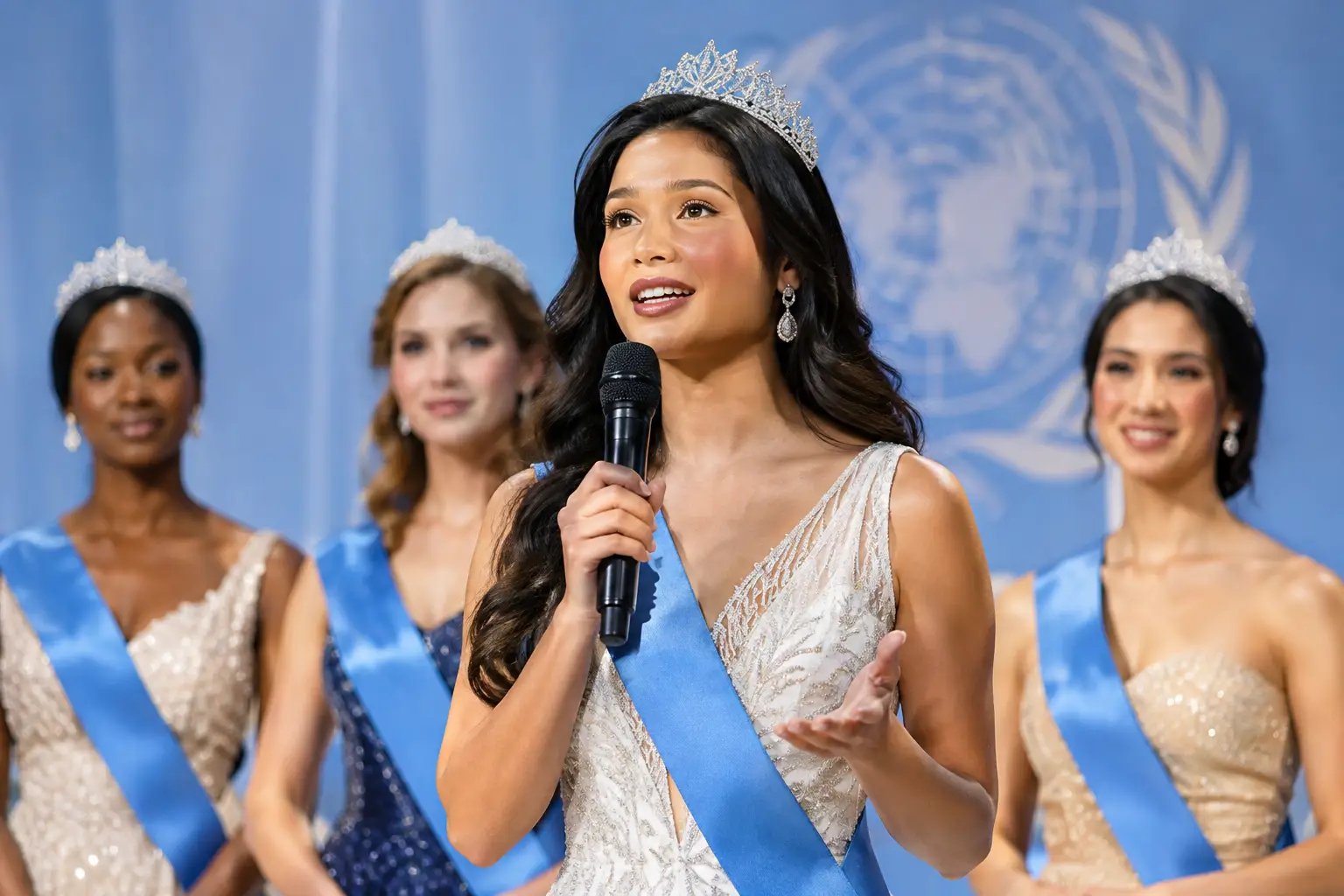
A pageant speech is not a school assignment with a sash added to it. It is your moment to make an arena, a judging panel, and an audience understand what you stand for beyond the gown, the walk, and the spotlight. Great pageant speech writing gives your purpose a voice – one that feels polished enough for a world-class stage and personal enough to be remembered after the Grand Finale.
The strongest speeches do not try to sound like everyone else. They give the audience a clear glimpse of the contestant behind the title: the experience that shaped her, the cause that matters to him, the young leader ready to make a difference, or the parent supporting a child’s big dream. Whether you are competing in Miss, Mrs., Ms., Mr., Teen, or Kids, the goal is the same: deliver a message with confidence, clarity, and heart.
Start With the Message Only You Can Deliver
Many contestants begin with a topic: mental health, literacy, service, confidence, environmental responsibility, anti-bullying, or community leadership. A topic is a worthy starting point, but it is not yet a speech. Your message becomes powerful when you explain your personal connection to it.
Ask yourself what moment made this cause real for you. Maybe you watched a family member struggle to find support. Maybe a teacher changed the direction of your life. Maybe you discovered your confidence through performance, volunteer work, sports, motherhood, entrepreneurship, or overcoming a difficult season. You do not need to share every private detail to be authentic. You simply need to make the audience understand why this issue carries your name, your energy, and your commitment.
A clear central message can often be stated in one sentence. For example: “I believe every young person deserves the encouragement to see their own potential.” That sentence becomes the foundation for the rest of your remarks. Every story, example, and closing line should support it.
Avoid choosing a cause only because it sounds impressive. Judges can recognize the difference between a borrowed message and a lived one. Prestige comes from purpose delivered with conviction, not from trying to cover the biggest issue in the room.
Pageant Speech Writing Begins With a Strong Opening
The first 10 seconds matter. Instead of opening with a long list of accomplishments or a broad statement such as “I am honored to be here,” lead with a line that creates immediate interest. The best opening may be a brief personal image, a thoughtful question, or a direct declaration of purpose.
Consider the difference between these two approaches:
“I am here today to speak about confidence.”
“At 14, I learned that confidence is not something you wait for. It is something you practice before you feel ready.”
The second opening gives the audience a reason to lean in. It has a point of view. It also creates a natural path into your story and platform.
Keep the opening simple. A pageant speech is a live performance, not a research presentation. You should never need several sentences to explain what your first sentence means. If your opening feels complicated when you read it aloud, revise until it sounds natural in your own voice.
Build a Story, Not a Resume
Contestants often feel pressure to include every award, service project, credential, and milestone. Those achievements deserve celebration, but a speech is not the place to list them all. A long resume can make even an accomplished contestant sound distant.
Choose one meaningful story or example instead. Give it enough detail to create an emotional picture, then connect it to the larger purpose. If your platform involves literacy, you might describe a child discovering the confidence to read aloud. If your purpose centers on mentorship, you might share the first time a young person told you they felt seen. If you are speaking about entrepreneurship, you might describe the moment you chose to turn an idea into action.
Specificity makes a speech memorable. It also keeps your message from sounding scripted. You are not trying to prove that you have done everything. You are showing that you understand the work and are ready to represent it with intention.
Give Your Speech a Clear Shape
The most effective competition speeches are easy to follow. The audience should never wonder where you are going or why a detail was included. A dependable structure has three movements: the personal connection, the purpose, and the invitation.
First, introduce the experience, belief, or observation that grounds your message. Next, explain what you are doing or hope to do because of it. Finally, invite the audience to remember, consider, or act on a meaningful idea.
For a short speech, one story and one message are usually enough. Trying to address multiple causes, family history, career goals, travel dreams, and a full service record in a limited time can weaken the impact. The trade-off is real: a broader speech may sound ambitious, but a focused speech is far more likely to land.
Use transitions that sound conversational. Phrases such as “That experience taught me,” “This is why I believe,” and “My goal is to” help your ideas move forward without sounding overly formal. Let your final line feel earned by the story that came before it.
Write for the Ear, Not the Page
Pageant speech writing must be heard, not merely read. A sentence that looks elegant on paper can become awkward under lights if it is too long, packed with jargon, or difficult to say in one breath.
Read every draft aloud. Notice where you rush, stumble, or lose energy. Those are not failures in your delivery. They are signs that the writing needs refinement. Shorten the sentence, replace a formal word with a familiar one, or break one thought into two.
Aim for language that is elevated but genuine. A global pageant stage calls for poise, yet you do not need to sound like a press release. Your personality is an advantage. If you are warm, let the warmth show. If you are energetic, use that momentum. If you are naturally thoughtful, allow a well-placed pause to carry meaning.
Be careful with statistics. One striking, accurate number can add weight, but several facts can turn your speech into a report. If you use a statistic, explain why it matters to people. Numbers establish scale; stories create connection.
Practice Until It Feels Like a Conversation
Memorization is not the same as connection. You should know your speech well enough to look up, smile, pause, and respond to the room, but avoid delivering it with a rigid, rehearsed rhythm.
Practice first in front of a mirror, then on video. Video is especially helpful because it reveals habits you may not notice: swaying, rushed endings, repeated gestures, lowered eyes, or a voice that gets quieter at the end of each sentence. Review with kindness and make one improvement at a time.
Then practice for people who will give honest feedback. Ask them what line they remember, where they felt most engaged, and whether your purpose was clear. Do not ask only whether they liked it. A supportive team can love your speech while still helping you sharpen it.
Time every rehearsal. If your allotted time is two minutes, do not prepare a speech that takes two minutes exactly at home. Nerves, applause, and pauses can change your pace on stage. Build in a small cushion so you can deliver with calm authority rather than racing toward the final sentence.
Let Presence Carry the Words
Your delivery should support the message, not compete with it. Stand tall, ground your feet, and breathe before your first word. Use eye contact across the room rather than locking onto one judge or staring above the audience. A calm pause after an important line can be more powerful than adding extra words.
For younger contestants, parents and coaches can help shape language that feels age-appropriate and easy to own. The child should understand every phrase and feel comfortable saying it. For adult divisions, the same principle applies: sophistication should never erase personality.
At United Nations Pageants, contestants step onto a stage built for glamour, purpose, and global representation. Your speech is where those elements meet. It is your opportunity to show that your title would represent more than a beautiful moment – it would represent a meaningful voice.
Before you take the stage, read your closing line one more time and ask a simple question: does this sound like me at my very best? If the answer is yes, trust your preparation, lift your chin, and let your purpose be heard.
Comments are closed